Behind the Scenes: How a Mat Manufacturing Company Operates
What happens inside a mat manufacturing company before your order ships determines everything about quality, consistency, and long-term supplier reliability. When buyers search for a mat manufacturing company, the conversation usually starts with price and lead time. Both matter. But the questions that protect long-term sourcing relationships go much deeper. How is the factory organized? Where does raw material accountability begin? What does quality control actually look like in practice? These are the questions that separate a smart sourcing decision from an expensive one. Sapana Mats operates as a wholesale mat supplier with full in-house production, which means every answer to those questions starts and ends on our factory floor. This blog answers those questions directly. If you are an importer, distributor, or procurement manager sourcing mats at volume, understanding how a modern factory operates will sharpen your supplier evaluation and protect every purchase decision you make.How a Professional Factory Floor Is Organized
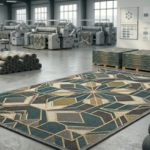
A well-run factory is designed around material flow. Raw material storage is separated from active production. Finished goods are staged away from cutting and finishing zones. This separation prevents contamination, simplifies traceability, and keeps production moving without bottlenecks. At Sapana Mats, our facility layout reflects years of refining a production sequence that handles raw material intake, processing, finishing, and export-ready packaging under one roof. Buyers who want to understand our manufacturing capabilities before committing to an order are welcome to request a virtual audit or facility walkthrough. We operate with that level of openness because our process holds up to scrutiny.Raw Material Selection: Where Quality Is Actually Decided
Every mat starts with a material decision. Polypropylene, natural fiber, and recycled content each have different processing requirements and end-use performance characteristics. Selecting the wrong material for an application creates warranty claims, returns, and broken buyer relationships. For polypropylene mat production, raw material evaluation covers melt flow index, UV stabilizer content, and colorfast consistency across batches. For recycled content products, incoming material is tested for contamination and structural integrity before it enters the production line. Buyers sourcing eco-friendly polypropylene mats should ask their supplier exactly what percentage of recycled content is verified and documented, not estimated. Material records matter at customs clearance, at retail compliance checks, and increasingly in corporate sustainability reporting chains. A manufacturer who cannot produce raw material documentation is a liability, not a partner.The Production Process: Stage by Stage
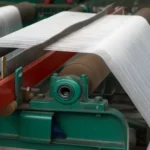
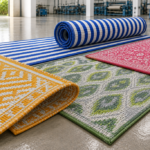
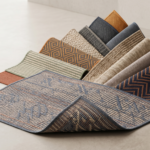
Extrusion and Yarn Formation For polypropylene mats, production begins at the extrusion stage. Raw polymer is melted, filtered, and drawn into flat tape yarn or monofilament. Yarn diameter, tensile strength, and elongation are all set at this stage. Inconsistency here shows up later as uneven weave density, poor dimensional stability, and surface defects that only become visible after moderate use. Understanding how polypropylene mats are made gives buyers a clearer picture of why price differences between suppliers are not arbitrary. Yarn quality is invisible in a product photo. It becomes very obvious after six months of real-world foot traffic. Weaving and Construction Yarn feeds into flat weave or woven looms calibrated for each specific mat construction. Picks per inch, warp tension, and pile height are monitored during production, not just at the end of a shift. Width consistency across the full roll is critical for buyers who cut mats to custom dimensions for commercial or retail installations. Our outdoor mats and indoor mats are produced on equipment maintained to consistent calibration standards. Equipment wear directly affects dimensional accuracy. Buyers working with factories that defer maintenance to cut costs will see it in their shipments eventually. Finishing, Binding, and Cutting Unfinished edges fray. Improperly bonded backings delaminate. These are not defects that appear during inspection. They appear in the field, at the end customer’s location, after the order has already been accepted and paid. Finishing operations include edge serging or binding, backing application, and dimensional cutting to specification. For picnic mats and camping and RV mats, finishing quality directly affects packaged presentation and how the product holds up against consumer durability expectations in export markets.Quality Control Across Three Checkpoints
Professional mat manufacturing does not rely on end-of-line inspection alone. Quality is verified at three distinct stages. Incoming material inspection catches supplier-side variation before it reaches production. In-process checks identify dimensional drift, weave defects, and color inconsistency before they multiply across a full batch. Pre-shipment inspection confirms the finished order against buyer specification before packing and loading begins. Our certifications reflect the standards we maintain across this entire process. Buyers who factor certification into supplier selection are not being bureaucratic. They are protecting themselves from the cost of rejected shipments and the reputational exposure that comes with them.Customization Inside a Live Production Environment
Customization is where many factories quietly struggle. The capability to produce a standard mat at volume is fundamentally different from executing a custom color, branded surface, or non-standard dimension without disrupting production efficiency. Custom work requires approved specifications before production starts. Color matching requires a physical sample sign-off. Artwork for surface printing requires confirmed file formats and resolution. Getting these details right at the brief stage is what separates a smooth custom run from a costly revision cycle that eats into your margin and your timeline. Buyers planning custom programs should open that conversation early, not after placing a purchase order.Export Readiness: Packing, Documentation, and Dispatch
A factory that produces excellent mats but ships them poorly is still a sourcing risk. Export packing must account for transit duration, port handling conditions, and moisture exposure during sea freight. Compression ratios for rolled mats, carton burst strength, and pallet configuration are not afterthoughts. They are planned before production completes. Buyers sourcing from India for markets in Australia or Germany face different compliance documentation requirements. We prepare export documentation as a standard part of order fulfillment. This reduces the clearance delays and back-and-forth that first-time importers typically encounter when factories treat paperwork as an afterthought. Our global reach covers active supply relationships across multiple continents and we understand what documentation each market actually requires.Why Factory Transparency Builds Better Buyer Relationships
Procurement decisions in the mat industry are rarely one-time events. Buyers who find a reliable source stay with them across multiple seasons and categories. The buyers who make poor decisions early end up renegotiating after rejected shipments, quality disputes, and inventory gaps. Factory transparency is how a manufacturer demonstrates reliability before the first order ships. When you understand how a modern mat manufacturing company actually operates, you can evaluate fit before committing to container volumes. That knowledge protects both sides and is the foundation of every long-term supply relationship worth having. We welcome sample requests, facility inquiries, and sourcing conversations from qualified buyers and trade partners. Contact us to start the conversation.Frequently Asked Questions
Look for documented quality control at incoming, in-process, and pre-shipment stages. Ask for raw material traceability records, certification documentation, and export experience relevant to your destination market. A manufacturer who can walk you through their production process step by step carries far less sourcing risk than one who only shares product images and a price list.
Consistency comes from standardized raw material specifications, calibrated equipment, and in-process quality checks at defined intervals. Reputable manufacturers track key parameters like picks per inch, GSM, and dimensional tolerance across production batches and make this data available to buyers during order review or pre-shipment inspection.
Established manufacturers typically offer custom sizing, color matching, surface branding, and retail-ready packaging. The practical limits depend on minimum order quantities, artwork file specifications, and production lead time. Always discuss customization requirements before placing an order to align expectations on both sides and avoid revision costs mid-production.
Mats are rolled or flat-packed, then wrapped in moisture-resistant material before being placed in export cartons sized for FCL or LCL sea freight. Compression ratios, carton strength, and pallet configuration should match the destination port's handling conditions and the expected transit duration to prevent damage before the shipment reaches the buyer.
Standard documentation includes a commercial invoice, packing list, certificate of origin, and pre-shipment inspection certificate. Depending on the destination market and mat material, buyers may also need REACH compliance declarations, phytosanitary certificates, or specific test reports. A factory experienced in export will prepare this documentation without being prompted.
For standard catalog products, production lead time is typically 15 to 25 working days after order confirmation and advance payment. Custom orders involving new color development or surface artwork may require an additional 5 to 10 working days. Buyers should factor peak export season timelines into their inventory planning to avoid gaps.
Yes. Many manufacturers work with new importers and smaller volume buyers, though minimum order quantities vary by product type. Starting with a sample order before committing to container volumes is the most practical approach. A manufacturer willing to ship samples and discuss your requirements before negotiating bulk terms is demonstrating confidence in their own product and process.