How to Choose a Reliable Polypropylene Mat Supplier for Bulk Import
Importing polypropylene mats at scale is not a decision driven by price alone. Wholesalers and importers who have navigated multiple sourcing cycles know that the true cost of a poor supplier shows up later. Rejected shipments, quality complaints from retail buyers, and production delays that break your supply commitments are all consequences that experienced buyers work hard to avoid.
This guide is written for buyers who are actively evaluating PP mat suppliers and need a structured way to compare options before committing to bulk orders. Every criterion below reflects what experienced importers consistently flag as non-negotiable in their supplier selection process.
Start With Manufacturing Capability
A supplier’s product range tells you what they can show. Their manufacturing infrastructure tells you what they can reliably deliver at scale.
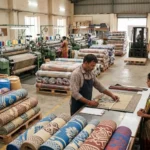
Before reviewing samples or pricing, ask for documented production capacity including monthly output figures, machinery details, and whether manufacturing is fully in-house or partly outsourced. A PP mat manufacturer with vertically integrated production has far greater control over batch consistency, lead times, and quality at volume.
Key questions to ask upfront:
What is your monthly production capacity for flat woven PP mats? Do you handle yarn extrusion, weaving, and finishing under one facility? What is your average lead time for an order of 2,000 to 5,000 units?
Suppliers who answer these questions with data rather than vague reassurances are demonstrating operational transparency.
Certifications Are Non-Negotiable
Regulatory compliance is where many importers face costly surprises. A polypropylene mat supplier exporting to Europe must meet REACH chemical compliance standards. Suppliers serving North American retail chains often need CPSC aligned safety documentation. Markets in the Middle East and Australia carry their own import certification requirements.
Beyond product level compliance, third party audits like BSCI, SEDEX, or equivalent social compliance certifications matter increasingly to retail buyers and ESG conscious procurement teams.
Review the certifications held by the manufacturer and match them against your destination market’s import requirements. The blog on understanding mat compliance standards provides a practical breakdown of what each certification covers and why it matters for cross border trade.
Do not accept verbal assurances. Request the actual certificate documents, verify their validity dates, and confirm the certifying body is recognized in your target market.
Request Samples From Live Production
This is one of the most overlooked steps in bulk sourcing. Many buyers evaluate samples prepared specifically for presentation and not pulled from a standard production run. These showcase samples often have tighter weave density, sharper color saturation, and better finishing than what arrives in a commercial shipment.
Request production samples, meaning pieces taken directly from an active or recently completed order. Then evaluate them against the following:
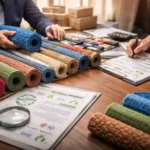
Colorfastness under UV exposure. Ask for lab test results, not just supplier claims. Weave density and yarn quality consistency across the sample batch. Edge finishing quality and backing material integrity. Dimensional accuracy against specified measurements.
For a clearer understanding of what durability and water resistance claims should be backed by technically, the post on water resistance and durability is worth reviewing before you place a trial order.
Evaluate Customization Depth
Importers supplying retail chains, garden centers, or home décor distributors often operate on private label or exclusive design agreements. Not every polypropylene mat supplier has the in-house capability to support this.
Confirm whether the manufacturer offers:
Custom dimensions and non-standard shapes. Exclusive weave patterns with design protection. Pantone or RAL color matching. Branded packaging, labeling, and carton customization. Flexible MOQs for new design introductions.
Suppliers with an extensive design and collections portfolio and dedicated in-house design teams are structurally better equipped for private label partnerships than those offering catalog only products.
Prioritize Proven Export Experience
There is a meaningful difference between a manufacturer that produces for domestic distribution and one that has built a functioning export operation. Export experienced suppliers understand commercial invoice accuracy, packing list standards, pre shipment inspection coordination, and country of origin documentation. All of these affect how smoothly your shipment clears customs.
Ask for a list of countries they currently export to and which freight and logistics partners they work with regularly. A supplier with verified global reach and export history across 20 or more countries has processed enough shipments to handle complexity without it becoming your problem.
Also review whether they have experience navigating trade specific considerations such as GSP eligibility or import duty structures relevant to your market.
Sustainability Is a Sourcing Baseline
Retail buyers in Europe and North America are increasingly requiring suppliers to meet environmental sourcing standards as a condition of doing business and not as a premium consideration. This expectation is flowing upstream to wholesalers and importers.
When evaluating a polypropylene mat supplier, ask specifically about:
Use of recycled or post consumer PP content. Energy consumption disclosures in the manufacturing process. Waste reduction practices at the production facility. Environmental certifications such as GRS (Global Recycled Standard).
The post on sustainability in polypropylene manufacturing outlines what responsible sourcing looks like in this product category and what documentation buyers should request. Additional context on recycled mat import demand shows how this trend is reshaping procurement decisions across key markets.
What Reliable Suppliers Do Differently
After evaluating multiple sourcing options, experienced importers consistently identify the same differentiators in suppliers they return to:
They share production data proactively rather than waiting to be asked. They provide third party lab reports alongside physical samples. They offer clear escalation paths when production issues arise. They have dedicated export coordination teams and not a single sales contact managing everything. They can reference verifiable buyers and completed shipments in markets similar to yours.
These are not traits that show up in a product catalog. They reveal themselves during the qualification process. Refer to the key factors for bulk sourcing and the bulk mat sourcing strategy guide for a broader framework that experienced procurement teams apply when shortlisting suppliers.
What to Verify Before You Commit
Choosing the right polypropylene mat supplier for bulk import is a structured evaluation process and not a catalog comparison. The criteria that matter are:
Verified in-house manufacturing capacity with documented output. Current market specific compliance certifications. Production samples with supporting lab test data. Genuine customization capability and not just catalog variation. Active export history across multiple international markets. Documented sustainability practices with verifiable credentials.
Suppliers who meet all six criteria consistently reduce sourcing risk. Those who fall short on even two or three represent a liability in your supply chain regardless of how competitive their pricing appears at first glance.