What Is GRS Certification and Why Should Your Mat Supplier Have It?
Sustainability requirements in retail procurement across Europe and Australia have moved well past voluntary commitments. For importers, wholesalers, and retail buyers supplying or stocking outdoor floor coverings in these markets, the question is no longer whether sustainability credentials matter. It is whether your supplier can document them in a format that satisfies vendor approval processes and stands up to regulatory scrutiny.
GRS certification is one of the most consequential credentials a polypropylene mat supplier can hold. Understanding what it covers, what it actually verifies, and why it directly affects your business is essential knowledge for any buyer operating in these markets today.
What GRS Certification Is
The Global Recycled Standard, administered by Textile Exchange, is an international product standard that verifies the recycled content of a product and ensures responsible social, environmental, and chemical practices are maintained throughout the supply chain.
For polypropylene mat manufacturers, GRS certification verifies two things specifically. First, that a documented and independently audited percentage of the PP material used in production originates from post consumer or post industrial recycled sources. Second, that the entire chain of custody from raw material through to finished product has been verified by an accredited third party certification body.
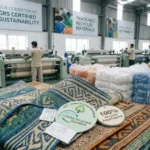
GRS certification is not a self declaration. Every facility in the supply chain that handles the certified material must be independently audited and approved. This makes it a rigorous and verifiable standard rather than a marketing claim. Review the certifications held by Sapana Mats for a full reference on the compliance standards maintained across our manufacturing operation.
Why European and Australian Buyers Require It
Retail procurement teams across Europe and Australia are increasingly treating GRS certification as a baseline vendor condition rather than a differentiating credential. Two distinct regulatory and market environments are driving this shift.
In Europe, the EU Green Deal and its associated product sustainability frameworks are creating binding documentation requirements for recycled content claims across product categories including floor coverings. Major European retail chains and e-commerce platforms have embedded supplier sustainability disclosures into standard vendor onboarding processes. ESG reporting obligations across listed European businesses are pushing recycled content verification upstream into procurement criteria.
In Australia, consumer protection law requires that environmental and sustainability claims made on or about products be accurate, substantiated, and not misleading under Australian Consumer Law. Retailers stocking products carrying recycled content or sustainability claims without verified third party documentation face direct regulatory exposure. GRS certification provides the independent verification that satisfies this standard.
For importers and wholesalers supplying both markets, sourcing from a supplier without current GRS certification creates a growing risk of vendor disqualification as retail partners tighten their requirements. The post on certified mats and global contracts covers how certification credentials are becoming decisive in retail supplier selection across these regions.
What GRS Certification Tells You About a Supplier
Beyond regulatory compliance, GRS certification reflects the operational maturity of a mat manufacturer in ways that matter to buyers evaluating long term supply relationships.
Achieving and maintaining GRS certification requires investment in raw material traceability systems, supply chain documentation, third party audit readiness, and chemical compliance verification across the production process. A polypropylene mat manufacturer holding current GRS certification has demonstrated that their operations are built around verifiable claims rather than unsubstantiated ones.
This organizational discipline is the same capability that produces consistent product quality, accurate export documentation, and reliable compliance across shipments. The post on sustainability in polypropylene manufacturing and the overview of recycled mat import demand provide further context on how this standard is reshaping procurement expectations across both markets.
How to Verify a Supplier’s GRS Status
Accepting a GRS claim at face value is not sufficient due diligence. Verification requires two steps.
Request the current GRS certificate document from the supplier. Confirm the validity date, the accredited certification body, the specific facility scope, and the product categories covered. A certificate covering yarn production does not automatically extend to the finished mat manufacturing facility unless that facility is separately audited and listed on the certificate.
Then verify the certificate independently through the Textile Exchange public database where all currently certified facilities are listed by name and scope. This takes under five minutes and eliminates any risk of accepting an expired or misrepresented certification. The post on understanding mat compliance standards provides a practical framework for evaluating supplier certifications across multiple international standards relevant to European and Australian import requirements.
Making GRS a Sourcing Standard
GRS certification is transitioning from a differentiator to a baseline expectation in sustainability audited retail environments across Europe and Australia. Importers, wholesalers, and retail buyers who build GRS verified sourcing into their supplier qualification process now are better positioned for the regulatory and retail compliance requirements that are already active in both markets and tightening further.
For buyers ready to evaluate certified outdoor mat suppliers, the key factors for bulk sourcing guide provides a complete framework for building a compliant and resilient supply chain.