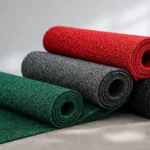
Camping Mats Manufacturer in India: Features, Uses & Buying Guide
The camping and outdoor lifestyle market has grown at a pace that has surprised even seasoned retailers. What was once a niche category served by specialist outdoor stores has become a mainstream retail segment with buyers across Europe, North America, and Australia actively sourcing quality camping mats at scale. At the center of this supply story sits India, home to some of the world’s most capable camping mats manufacturers combining material expertise, production scale, and competitive pricing in a way few other countries can match.
Whether you are a wholesale buyer building an outdoor living range, an importer supplying RV and camping retailers, or a brand developing a private label collection, this guide covers everything you need to know about what makes a good camping mat, where and how they are used, and what to look for when choosing the right manufacturer to supply them.
What Makes Camping Mats Different
Camping mats are not simply outdoor floor coverings. They are functional products designed to perform in conditions that most floor mats are never asked to handle. Direct contact with uneven ground, exposure to moisture from dew and rain, heavy foot traffic from boots, UV exposure across extended outdoor stays, and the practical need to roll or fold for easy transport all place specific demands on the materials and construction methods used.
The best camping mats balance several properties simultaneously. They need to be lightweight enough to carry or pack without inconvenience. They need to be durable enough to withstand rough surface contact without degrading quickly. They need to drain or dry quickly after rain exposure. And increasingly, buyers expect them to be designed attractively enough to serve as genuine outdoor living products rather than purely utilitarian accessories.
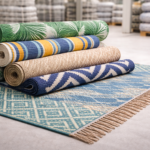
Polypropylene is the material of choice for most premium camping mats manufactured in India today. It combines UV stability, moisture resistance, easy cleaning, and structural durability in a way that natural fiber alternatives simply cannot match for outdoor use. Our post on waterproof and travel ready mat design explains in detail why polypropylene has become the dominant material for camping, beach, and travel mat applications globally.
Where Camping Mats Are Used
The use cases for camping mats have expanded well beyond traditional tent pitching. Understanding the full range of applications helps buyers source products that serve multiple retail segments from a single well chosen range.
Tent entrance mats are one of the most consistent sellers in the category. A mat placed at the entrance of a tent keeps dirt, moisture, and debris from being tracked inside, extending the cleanliness and comfort of the interior space. These mats need to be compact, quick drying, and resistant to the kind of abrasion that comes from boot contact on rocky or gravelly terrain.
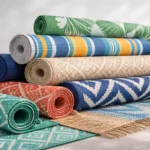
RV and motorhome awning mats are a significant and growing application. Travelers who park their vehicles at campsites use outdoor mats to define and furnish the living space beneath their awning. These mats are typically larger, often reversible, and need to perform well across extended outdoor stays in varying weather conditions. Our dedicated post on wholesale outdoor rugs and camping mats covers the specific product requirements that buyers sourcing for this segment should understand.
Glamping and boutique camping resorts represent another strong demand source. As the hospitality industry has embraced the glamping format, the demand for premium outdoor mats that deliver both performance and aesthetic appeal has grown considerably. Resort operators need mats that look curated and on brand while still surviving the practical demands of outdoor hospitality use. Our post on mats driving industry growth explores how RV parks, resorts, and outdoor hospitality venues have become a meaningful driver of mat demand globally.
Picnic mats, festival ground cover, beach mats, and garden leisure mats all draw on the same core manufacturing capability and sit naturally alongside camping mats in a well structured outdoor living product range.
Key Features to Look For
When evaluating camping mats from any manufacturer, the following features determine whether a product will perform well in the field and sell consistently at retail.
UV stabilization is the first non negotiable. A camping mat that fades or becomes brittle after a single season of outdoor use creates returns, negative reviews, and lost repeat business. Proper UV stabilization during the fiber production process ensures the mat retains its color and structural integrity across multiple seasons of outdoor exposure. Ask any manufacturer specifically how UV stabilization is achieved in their production process, not just whether it is present.
Water resistance and drainage capability matter equally. A mat that holds moisture creates a slipping hazard and an unpleasant user experience. The open weave constructions used in most quality polypropylene camping mats allow water to drain through rather than pool on the surface, and the material itself does not absorb moisture in the way natural fibers do.
Packability is a feature that retail buyers sometimes overlook but end consumers prioritize. Mats that roll tightly, fold flat, or come with a carry bag or strap are significantly more attractive to camping and travel buyers than those that are bulky or difficult to transport. This is a customization conversation worth having with your manufacturer early in the product development process.
Construction weight and density directly affect both durability and packability. Heavier constructions last longer under rough use but are less portable. Understanding the end use context of your retail customer helps you specify the right balance for your market.
Why India Leads This Category
India’s camping mats manufacturing industry benefits from the same structural advantages that make the country a leading source for outdoor mats more broadly. Deep experience in polypropylene processing, a skilled production workforce, established export infrastructure, and competitive pricing combine to create a sourcing proposition that buyers from across the world return to consistently.
What distinguishes the best Indian camping mats manufacturers is their ability to deliver customization alongside volume. Buyers can specify mat dimensions, weave patterns, color combinations, carry bag designs, and private label packaging all within a single supplier relationship. This matters because camping and outdoor retail is a design sensitive category where product differentiation drives margin. Explore the camping and RV mat collections at Sapana Mats to see the range of styles and specifications available for wholesale and export buyers.
India was also among the first countries to introduce UV stabilized outdoor mats and rugs as a standard product specification rather than a premium addition, which means the manufacturing knowledge base for producing genuinely weather resistant camping mats is deep and well established. Learn more about the production standards and sustainability practices behind Sapana Mats on the about us page.
Buying Guide for Importers
Sourcing camping mats from an Indian manufacturer for the first time involves a number of practical decisions that are worth thinking through before you place your first inquiry.
Start with a clear product brief. Specify the intended use, target size range, required UV and weather performance, preferred construction type, and any compliance requirements relevant to your destination market. Manufacturers who receive detailed briefs provide faster, more accurate responses and are better equipped to recommend the right specifications for your application.
Request samples before committing to any volume. A sample evaluation should cover weave consistency, color accuracy against your specification, drainage performance, UV resistance documentation, and packability. Do not skip this step regardless of how confident a manufacturer’s presentation appears.
Understand minimum order quantities before you get deep into negotiation. Most established Indian camping mat manufacturers work with export buyers at order quantities of 500 to 2,000 pieces per style, though this varies by product complexity and material cost. Discussing volume expectations early avoids wasted time on both sides.
Verify certifications that matter for your market. OEKO TEX Standard 100 is increasingly expected by European retail buyers even for outdoor products. SMETA or BSCI social compliance certification is required by many major retail chains before a new supplier can be listed. The certifications page at Sapana Mats provides a complete overview of the standards the company holds for export compliance.
Factor lead times into your buying calendar. Production lead times for camping mats from India typically run four to eight weeks from order confirmation depending on volume and customization complexity. Sea freight to European ports adds a further three to four weeks. Buyers who plan their seasonal sourcing timeline around these realities avoid the rush decisions that compromise quality and cost control.
If you are ready to discuss your specific camping mat sourcing requirements, the Sapana Mats team is available to walk you through product options, customization capabilities, and export logistics in detail.