How Polypropylene Mats Are Made: A Step by Step Manufacturing Deep Dive
Most buyers evaluate polypropylene mats by what they can see in a sample. Color, texture, weight, and finish are the obvious inspection points. But the properties that determine how a PP mat actually performs over its life, including UV resistance, dimensional stability, colorfastness, and structural durability, are decided well before the finished product exists. They are decided inside the manufacturing facility. For importers, wholesalers, and retail buyers who want to source with genuine confidence, understanding how polypropylene mats are made is the foundation of credible supplier evaluation. Here is the full production process, written from 40 plus years of active manufacturing experience.Raw Material and Additive Preparation
The process begins with polypropylene resin arriving at the facility in pellet form. Raw material quality at this stage has a direct downstream impact on every performance characteristic of the finished mat including tensile strength, surface consistency, and certification eligibility. UV stabilizer additives including HALS (Hindered Amine Light Stabilizers) and UV absorbers are compounded into the resin before extrusion. This is the only stage where UV protection can be built into the material at a molecular level rather than applied as a surface treatment after production. Buyers evaluating UV resistant outdoor mats must confirm that UV stabilization happens at this raw material stage. The post on polypropylene mat basics covers the foundational material properties relevant to this stage.PP Tube Extrusion
The compounded resin is heated and forced through a circular die to produce continuous hollow PP tubes. This tube extrusion process is the defining production step in flat weave polypropylene mat manufacturing. For solution dyed production, color pigments are introduced directly into the polymer melt at this stage. Because pigment is incorporated before the tube is formed, color becomes structurally integral to the material rather than sitting on its surface. This is the production basis for superior colorfastness in outdoor mats compared to surface dyed alternatives under sustained UV and weather exposure. A PP mat manufacturer with in-house tube extrusion controls every critical variable at this stage including additive concentration, tube wall thickness, color consistency, and dimensional uniformity across the full production run.Tube Flattening Into Tapes
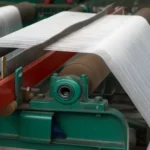
Once extruded, the hollow PP tubes are flattened under controlled pressure and temperature to produce flat PP tapes. This flattening process transforms the round tube cross section into a flat ribbon structure that serves as the primary weaving element in mat production. Tape width and thickness are controlled production variables that directly affect weave density, surface texture, and finished mat weight. Uniform tape dimensions across a production batch produce consistent weave density and surface appearance throughout the finished product. Variation at this stage introduces visible inconsistency that experienced retail buyers identify immediately during sample inspection.Zero Waste Manufacturing and Closed Loop Recycling
One of the most operationally significant aspects of responsible PP mat manufacturing is what happens to production waste. At Sapana Mats, a zero waste generation policy governs the entire manufacturing operation. All plastic scrap generated across the production process is collected, processed, and converted back into PP granules within the facility. These recycled granules are then reintroduced directly into the manufacturing process to produce new mats. No production waste leaves the facility as landfill. Over 30,000 kgs of plastic scrap are recycled back into production every month. For importers and retail buyers operating in sustainability audited markets across Europe, North America, and Australia, this closed loop recycling process is a documented and verifiable operational commitment rather than a marketing position. It reflects the same organizational discipline that supports GRS certification eligibility, consistent product quality, and responsible supply chain management. The posts on sustainability in polypropylene manufacturing and recycled mat import demand provide further context on how closed loop manufacturing practices are reshaping procurement expectations across global retail markets.Flat Weaving, Finishing and Quality Inspection
Flat PP tapes are loaded onto looms where warp tapes running lengthwise and weft tapes running across the width are interlaced to produce the flat woven mat structure. Weave density set at this stage determines finished mat weight, structural integrity, and foot traffic resistance. After weaving, mats are cut to specified dimensions and edge finished using serging, binding, or heat sealing depending on the product specification. Backing material including PVC latex, TPR (Thermoplastic Rubber), or open mesh is applied to the underside based on the intended use environment and destination market requirements. Before packing, every finished mat passes quality inspection covering dimensional accuracy, weave consistency, color uniformity, edge finish quality, and backing adhesion. At certified facilities this is supplemented by third party laboratory testing under ISO 105 B02 for colorfastness and for OEKO-TEX certified products, harmful substance testing across the full certified substance list. The design and collections portfolio illustrates the range of design complexity achievable through this production process.Export Packing and Documentation
Finished mats are folded or rolled, labelled with specifications and certification marks, and packed into export cartons optimized for container utilization efficiency. Export documentation including commercial invoice, packing list, and certificate of origin is prepared at this stage. Review the certifications held by Sapana Mats and the post on water resistance and durability explained for the specific parameters that quality test reports should address. For buyers ready to apply this manufacturing knowledge to supplier evaluation, the key factors for bulk sourcing guide provides a complete qualification framework.Frequently Asked Questions
The primary raw material is polypropylene resin arriving in pellet form. UV stabilizer additives including HALS and UV absorbers, color pigments for solution dyed production, and backing materials such as PVC latex, TPR, or open mesh fabric are additional inputs. At Sapana Mats, recycled PP granules converted from production waste are reintroduced into the manufacturing process as part of a zero waste closed loop recycling system that processes over 30,000 kgs of plastic scrap every month.
A PP tube is a continuous hollow tube produced by forcing molten polypropylene resin through a circular extrusion die. Once extruded, the hollow tube is flattened under controlled pressure and temperature to produce a flat PP tape. This flat tape is the primary weaving element used in flat weave polypropylene mat production. The tube extrusion and flattening process gives manufacturers precise control over tape width, thickness, color consistency, and UV stabilizer distribution throughout the material.
Zero waste manufacturing in PP mat production means that all plastic scrap generated across the production process is collected, processed, and converted back into usable PP granules within the facility rather than being sent to landfill or external waste processing. At Sapana Mats, these recycled granules are reintroduced directly into mat production every month. Over 30,000 kgs of plastic scrap are recycled back into the manufacturing process monthly, making the operation a verified closed loop system with no production waste leaving the facility as landfill.
UV stabilizer additives incorporated into PP resin during tube extrusion become molecularly integrated into the material at production. Protection is present throughout the full depth of every tape element rather than sitting on its surface. Surface applied UV treatments diminish under outdoor exposure because they are not structurally part of the material. For mats intended for sustained outdoor use in high UV index environments, extrusion stage UV stabilization is the only manufacturing method that delivers reliable long term performance.
Solution dyed polypropylene incorporates color pigments into the polymer melt during tube extrusion, locking pigment within the full cross section of the material. Surface dyed production applies color after extrusion, leaving pigment on the outer surface exposed to UV radiation, moisture, and mechanical abrasion. Under ISO 105 B02 accelerated weathering conditions, solution dyed PP consistently demonstrates superior colorfastness over extended outdoor exposure periods.
A credible manufacturer should conduct dimensional accuracy verification, weave consistency assessment, color uniformity inspection, edge finish quality review, and backing adhesion testing before packing. At certified facilities this internal inspection is supplemented by third party laboratory testing covering colorfastness under ISO 105 B02, tensile strength, and for OEKO-TEX certified products, harmful substance testing across the full certified substance list. Buyers should request test reports from independent laboratories alongside physical samples as standard sourcing practice.